

For startups and small businesses, managing overhead can be challenging, primarily as they also aim to build trust and credibility in the market.
Leasing traditional physical office space in Singapore, though it provides an invaluable professional presence and a reliable operational location, comes with high upfront costs, long-term commitments, and ongoing operational expenses.
A virtual office in Singapore offers a cost-effective alternative. By providing a virtual business address without the financial and upkeep burden of a physical office, startups can focus resources on growth rather than rent, utilities, and staffing.
In addition to a virtual address, these offices offer mail handling and forwarding, among other administrative services. In this guide, we’ll discuss how virtual office services in Singapore reduce operating costs for startups compared to leasing office space.
It’s not enough to have a space for the company to work in. It’s one thing to lease office space, but another thing entirely to ensure it’s operational and fit for work. Apart from the lease, more overhead is required to turn a space into a full-fledged office.
The associated costs and overhead are as follows:
Rent for a traditional office in Singapore, particularly in central business districts, is one of the most significant costs for startups. Securing a prime office space requires long-term leases, deposits, and advance payments.
For a small company, this can tie up capital that could otherwise be spent on business operations or growth initiatives. Furthermore, since startups are usually comprised of small teams, many startups find themselves paying for more office space than they need, reducing cost efficiency.
In addition, rent is often fixed for the duration of the lease. Even if the startup scales down, the financial commitment remains. After all, there is no way to “scale down” physical space.
Plus, if the company decides they no longer need the lease, they may need to maximise it until the end of the year since breaking leases early can lead to penalties. These factors reduce flexibility and make traditional office setups less appealing compared to virtual office solutions, which offer professional office addresses and registered business addresses without long-term leases.
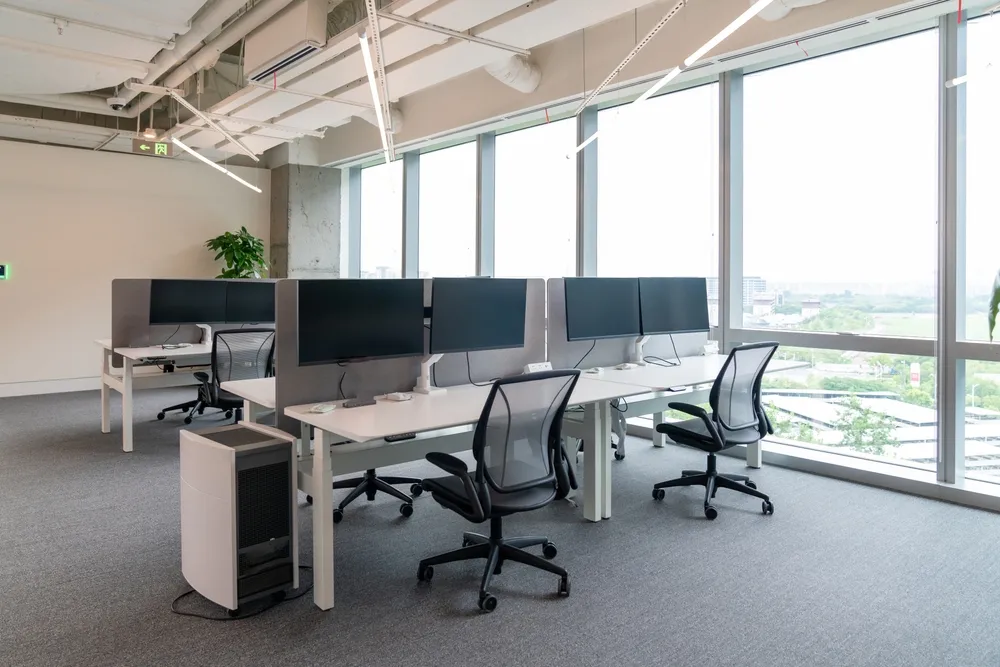
Office equipment includes all the physical tools and supplies that must be purchased upfront, and then continually restocked, repaired, or replaced over time. These items aren’t one-off expenses; they’re overhead that adds to the overall cost of maintaining a physical workspace.
They include essentials like computers, printers, monitors, routers, phones, and projectors, along with everyday supplies such as ink cartridges, paper, stationery, cables, ergonomic accessories, and basic office tools. While each item may seem small on its own, they accumulate into a significant expenditure, especially as the team grows or equipment wears out.
With virtual offices, however, staff use their own work devices. They use their own computers, printers, and consume their own ink cartridges and paper reams. This frees up a sizable chunk of potential overhead for the startup. Providing staff with work laptops is purely discretionary.
Traditional offices require ongoing utility payments for electricity, water, internet, and air conditioning. These are non-negotiable, since in a corporate setting, it’s impossible to get any work done without air conditioning or internet. These bills can fluctuate and add administrative overhead for startups.
Virtual offices eliminate these recurring utility costs. When subscribing to a virtual office package, startups don’t directly pay for utilities; these costs remain invisible to them. Instead, they pay a virtual office package fee and mail-forwarding fees, which we’ll tackle in a later section.
Startups can reduce overhead and gain cost efficiency by operating through a virtual office address without paying separately for utilities in a physical space.

Physical office spaces often require administrative staff, such as receptionists or office managers, to handle business correspondence and attend to visitors. Not to mention, housekeeping staff may also be required to maintain the leased space. Salaries, training, and law-mandated benefits for these employees add significant costs.
With a virtual office package, services like mail handling and forwarding are included in the office’s package, with some packages providing the functionality of a BPO provider. This gives the startup the virtual presence of a company with in-house reception staff, without the hefty costs of salaries and training.
Traditional office setups need ongoing maintenance, including cleaning, furniture repairs, and equipment upkeep. It’s best for startups to focus on growth and tangible results. If administrative tasks can divert time, resources, and effort from this focus, what more the time and effort required for facility upkeep?
Virtual office solutions remove this burden. Startups don’t need to maintain their virtual office address. The upkeep of the virtual office provider is their responsibility. This allows startups to focus on core operations.
Furthermore, since the startup is a remote team, there is no physical space to render upkeep for, other than the employees’ own personal spaces.

Leases in Singapore often require tenants to reinstate offices to their original condition upon leaving. This involves dismantling, redesigning, and restoration, and the material and labour associated with reinstatement can be costly and time-consuming for startups.
Office reinstatement is a time and labour-intensive hurdle. Even though the startup won’t likely be doing the renovation itself, the resources involved in planning, liaising, coordinating schedules, and meeting with a contractor could easily have been a business project for the startup.
By using a virtual office in Singapore, companies avoid reinstatement agreements entirely. This frees startups from the financial burden (and project-associated headache) of reinstatement.
The above are the common recurring costs associated with leasing traditional offices. On the other hand, there are fewer overhead costs involved when partnering with virtual offices.
Costs associated with virtual offices include:

Virtual offices provide a professional office address for company registration and bundle it with mail handling, mail forwarding services, and access to coworking spaces. These services are provided to startups at a reasonable subscription rate.
Here at Parkway Suites, we offer an office address in Singapore’s Paya Lebar Square, mail alerts, and mail forwarding for just 13 cents per day. To achieve these same benefits in a traditional office, startups would have to lease office space and hire a full-time receptionist.
When they subscribe to a virtual office package, startups can receive official government correspondence, business mail, and incoming mail at a virtual address in Singapore. However, the virtual office has to forward these to the startups’ actual operational addresses.
As such, there are usually costs associated with mail forwarding. These aren’t fixed rates, and would depend on how much correspondence the startup has received through the virtual office.
Many virtual office providers offer add-on services such as coworking spaces and courier-delivered cheque drop-offs.
This allows businesses to pick and choose which services they need without having to lease a whole physical office or hire full-time staff. Startups can add services according to their business needs as they scale, making virtual offices the more flexible solution.
Traditional offices have fixed leases which startups would have to pay in full, whether they’ll be using the space for three months or a year. In addition, to maintain a functioning traditional office, it involves other recurring costs such as utilities, office equipment, upkeep, utilities, and when the lease contract ends, startups would also have to worry about office reinstatement.
These are fixed costs that do not scale down as the startup does.
Virtual office solutions, in contrast, use a flexible pricing model.
Companies can choose the right virtual office package based on the features they need and, if they wish to upgrade, select additional services such as additional coworking space hours. In addition, some packages can provide the same functionality and benefits as if the startup were to hire reception staff.
Virtual offices offer a professional presence for a flexible cost, making them ideal for startups and international companies wishing to expand into Singapore.
Here are the costs associated with traditional and virtual offices:
Costs Associated with a Traditional Office
Costs Associated with a Virtual Office
Here at Parkway Suites, we provide startups and remote teams with the right virtual office solutions in Singapore.
With our virtual office rental plans, businesses receive a business address at Paya Lebar Square that they can register. In addition, we ensure our founders receive mail and correspondence sent to their newly registered business address through mail forwarding, WhatsApp, and email notifications.
We also provide coworking spaces and serviced office rentals for those needing in-person collaboration.
Get in touch with Parkway Suites today to explore virtual office plans, secure a professional office address in Singapore, and start saving on office costs.